

On January 28, 2015, I played my very first escape room: the Wicklewood Room at Claustrophilia in Budapest, Hungary. We failed to escape in time, but I was hooked and went onto play another 25 games over the following few months.
On August 12, 2026, I played my 1,000th escape room: Magnifico at Escaparium in Laval, Canada, currently ranked as the #1 English-friendly escape room in the world on TERPECA.
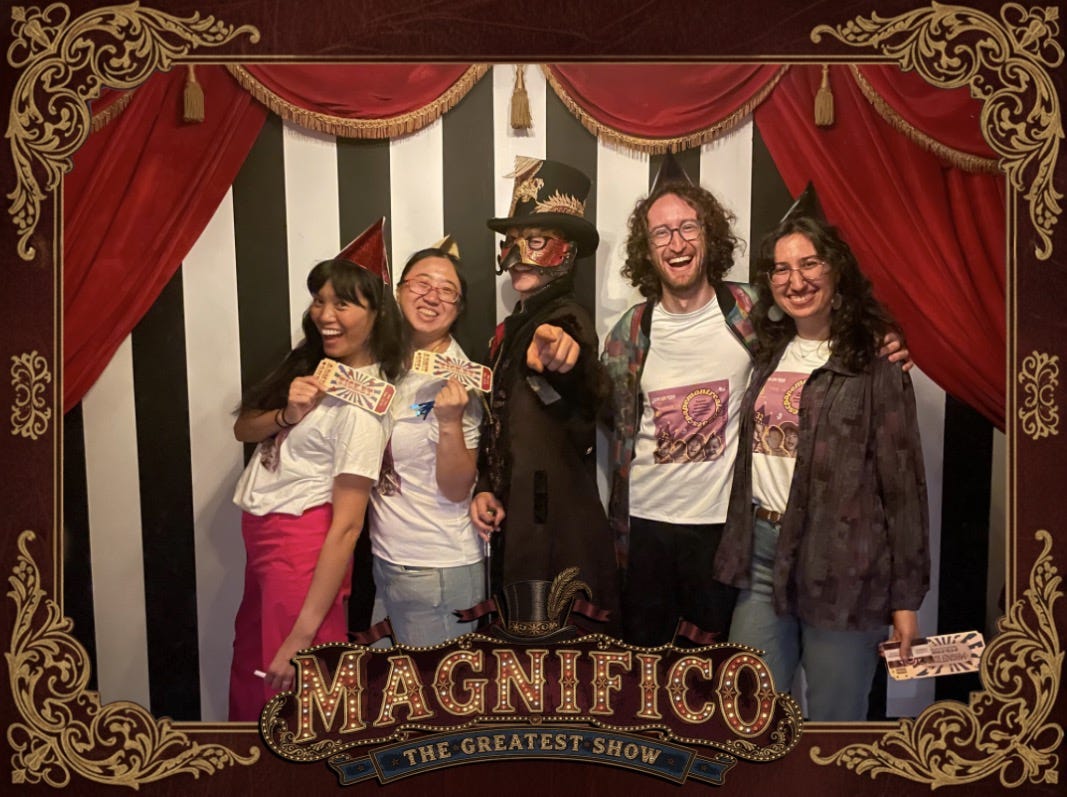
1,000 is a big number. Escape rooms have come a long way since 2015, and I’ve also come a long way.
In the process, puzzles turned from my passion into my full-time profession. I could never have expected where this journey has taken me, but I couldn’t be happier.
My Escape Room Origin Story
I’ve been at least mildly obsessed with puzzles for as long as I can remember.
As a young child, I immersed myself in puzzle books and out-jigsawed my older cousins. I delighted in the scavenger hunts my mom would make me for special occasions.
In middle school, I found the hobby of letterboxing, a real-life treasure hunt which often also featured elaborate puzzle clues. I’d regularly stay up hours into the night, long after I’d finished my schoolwork, deciphering intricate clues and creating my own. For the first time, puzzles weren’t just a thing I did in isolation. They were a community, and they were a conversation.
Then, in 2012, as a freshman in college, I discovered puzzle hunts (through an Abraham Lincoln-themed game designed by Jeopardy champion Ken Jennings for the Smithsonian!) Inspired, I created my own puzzle hunt that summer, which indirectly guided me onto a team for the MIT Mystery Hunt the following year. I don’t know if I was helpful at all that first year, but I sure was obsessed. I recruited all my college engineering friends to help tackle Puzzle Boat and various other online puzzle hunts throughout the years that followed.
I was fully saturated in the puzzle hunt world for nearly 3 years before discovering escape rooms in Budapest in 2015, and I only played escape rooms sporadically over the following years.
It took me 5 years to play my first 100 escape rooms… which is still a TON compared to most people. Yet, I’d never traveled to play escape rooms, I’d never played more than 3 escape rooms in a day, and I didn’t realize that there was a whole community around this interactive medium. I hadn’t yet fallen fully down the rabbit hole.
That all changed in early 2020, when I started writing for Room Escape Artist.
It was the early days of the pandemic, when none of us really knew what to do. With basically all in-person activities closed, many escape room designers started releasing online escape rooms. I wrote over 150 mini reviews of at-home games for REA, opening my eyes to a thriving global community of escape room creators and enthusiasts. I made literally hundreds of new friends over the course of two years, and once the world started opening back up, I was eager to meet them all in person.
Cue the first few waves of travel. I gathered teams of equally escape room-obsessed friends, chose a region with a high concentration of great games, and packed a multi-day schedule with typically 5-7 escape rooms per day. This sort of escape room marathon is not for the faint of heart, and I knew I’d really found my people.
After some time, my travels extended internationally, visiting numerous top escape room markets all around Europe, Australia, and Japan.
To date, I’ve played escape rooms in 26 US states and 19 countries. I’ve written over 200 solo byline articles for Room Escape Artist along the way.
Are Escape Rooms Still Fun?
After playing so many escape rooms, you might think they’d have gotten boring or repetitive for me.
In reality, the exact opposite is the case.
Escape rooms have branched into so many different subgenres. There’s still your classic game: a lightly themed room with some locked boxes and random puzzles. When approached creatively and with care, this baseline can be deeply enjoyable, especially when it allows the creator’s personality and passions to shine through.
But escape rooms have also been innovating in countless new directions, pulling inspiration from immersive theater, video games, and beyond. I’ve played games with high levels of physicality, involving climbing, crawling, and even swimming. I’ve explored unusual real-life settings, from an abandoned train depot to a castle. Some games have delighted us with fictional friends, and others even featured live animals, including cats and pigs.
Escape rooms are a fully-fledged interactive storytelling medium, and there are so many unique stories to tell.
I also approach escape rooms much differently now, looking at each game simultaneously as a player, as a designer, and as a critic. I know how to have fun in just about any game, and I can generally separate my personal enjoyment from my critical analysis. I also zoom out much more: looking at regional trends, and then analyzing how different regional patterns signal the global development of this fascinating medium. Each escape room I play is a valuable new data point in an increasingly complex and vibrant constellation.
I’ve also made a career out of designing puzzle hunts and ARGs… but that’s a story for a different time.
Keeping Count
People often ask me: how do you keep track of all the escape rooms you play? Do you have a spreadsheet or something?
Sometimes they’re joking, thinking it would be far too ridiculous to have a spreadsheet just to keep count of some silly games.
But oh boy, do I take my hobbies seriously. And they haven’t even seen my fancy graphs yet!
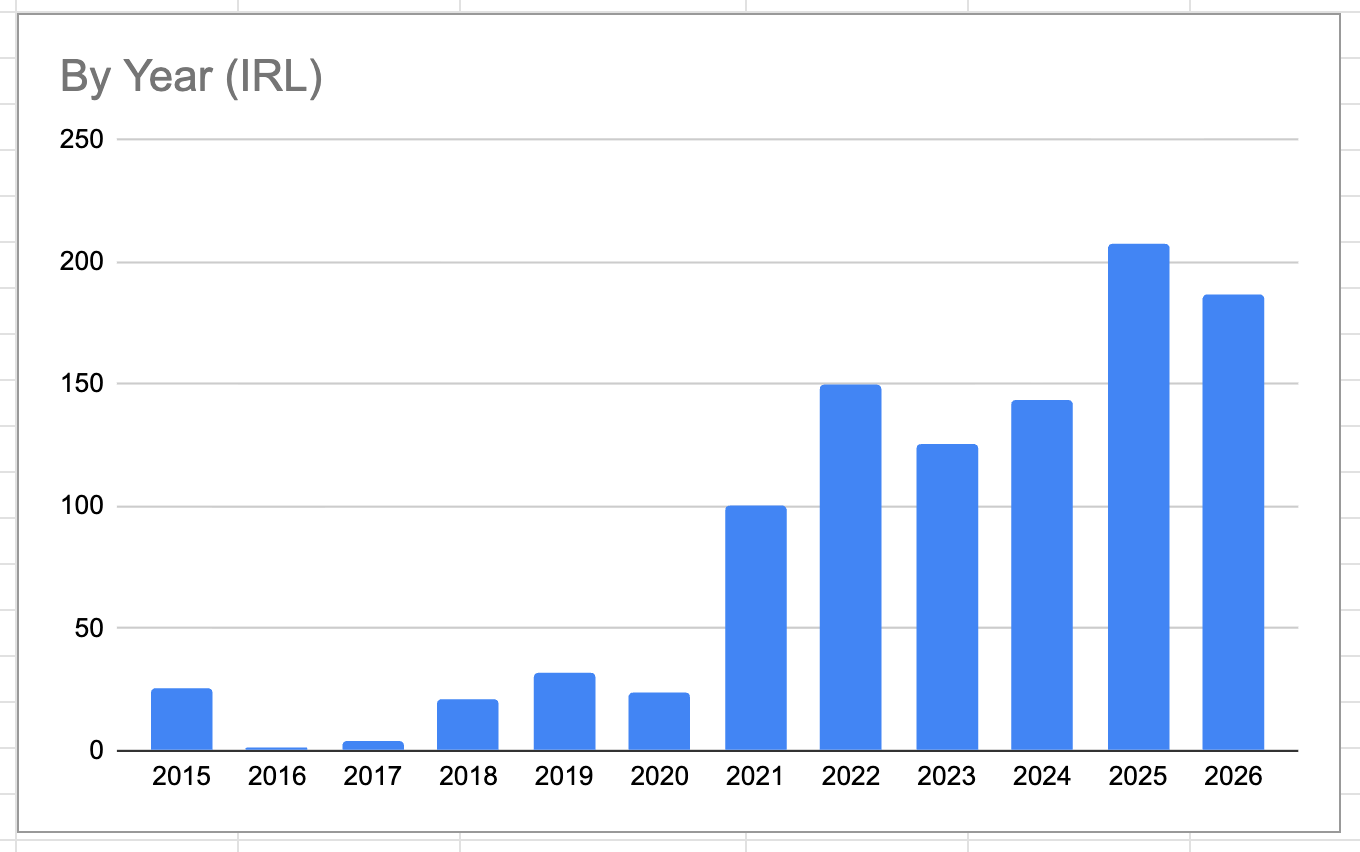
I have spreadsheets for numerous other things beyond escape rooms, and likely this sort of mindset is part of what draws me to the analytical aspects of puzzle solving in the first place.
My escape room spreadsheet is fairly simple: I have columns for the date played, game title, company name, city, state/country/region, freeform notes, and a link to my REA review if I wrote one. I don’t always keep track of who I played with or how long we took, unless that data is especially noteworthy.
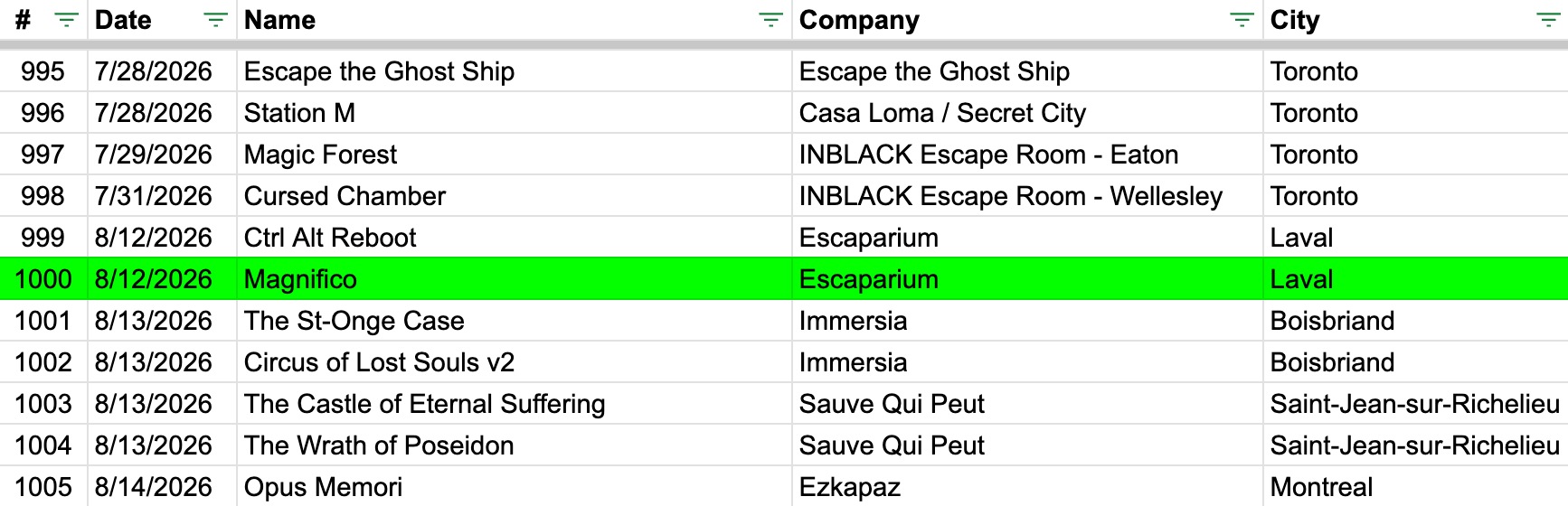
I have separate tabs for live, in-person escape rooms (the ones that count toward my “official” total), virtual escape rooms, non-puzzle immersive experiences, at-home puzzle games, and other miscellaneous things that feel vaguely related but don’t fit into any of those buckets, like challenge arcades and outdoor puzzle hunts.
I also log most of my games on the Morty app, though that lumps all sorts of other experience types together so I always reference my spreadsheet for my more proper count.

Follow me on Morty if you haven’t already - I’d love to see what games you’ve been playing!
What’s Next?
Passing 1,000 escape rooms might have been a good opportunity to call it quits and find a new hobby, but honestly, I’m still having an absolute blast and not planning to stop anytime soon.
Escape rooms have evolved so much in the past decade, but they also still have so much more room for growth.
So what’s next? More cross-pollination, learning from each other’s strengths and from adjacent mediums. Some regions excel in set design, others in special effects, others in mind-blowing puzzles, others in emotionally impactful storytelling.
Escape room design already involves a broad range of skills, and as escape rooms continue to assert themselves as immersive theater, or as real-life video games, we must also learn from the people who have already spent decades pushing more established mediums like theater, film, dance, and literature forward.
I’ve explored this multidisciplinary approach throughout much of my REA writing:
Work with professional composers to create original soundtracks
Design more elegant puzzles by learning from North American puzzle hunts and more puzzle-centric escape room cultures
Consider how environment and interaction prompts a sort of emergent choreography of your players
Level up your marketing with better team photos and higher quality merch
It’s been such a pleasure getting to connect the dots, across companies and across continents, because so many amazing, passionate, generous creators have given me so many colorful dots to connect.
I have some exciting trips and REA coverage coming up. I also have some new projects of my own which I’ll be announcing very soon… so make sure to follow along here on Substack, on my Instagram, and on my brand new Tiktok!
If you want to support my work financially, I also have paid subscriptions enabled. I’m committed to keeping as much of my work as possible free and widely accessible, so a paid subscription is primarily a way to support what I’m doing, rather than a paywall around a bunch of bonus content.
Here’s to the next decade of puzzling!
Matthew